Why Mississauga Basements Flood in Summer Storms (and Which Areas Get Hit Hardest)
Mississauga flooding in summer comes from short, intense storms that overload sewers and creeks. See how water gets in and which neighbourhoods get hit hardest.
By WDR Mississauga 12 min read
Most Mississauga flooding in summer happens because a short, intense storm drops more rain in a few hours than the pipes, ponds and creeks were built to carry at once. When the sewers fill, water backs up to the lowest opening it can find, and in most homes that is the basement floor drain.
The neighbourhoods that get hit hardest are the ones where that pressure meets a weak spot: low ground beside a creek, older homes with drains tied into the sewer, or a district like Lisgar with a high water table. Knowing which of those describes your street tells you which fix will actually help.
This guide covers summer rain and sewer surcharge. If your water shows up in March, when snow melts on frozen ground, our spring melt basement flooding guide explains that pattern instead.
Why summer storms are different
A summer thunderstorm is not a long, steady rain. It is a burst. Warm, humid air builds into a storm cell that can park over one part of the city and dump a month of rain before lunch, while a neighbourhood five kilometres away stays almost dry.
The City of Mississauga says its storm system is sized to carry flows based on peak intensity, using design storms that range from a 2-year storm up to a 100-year storm. A 100-year storm has a 1 per cent chance of happening in any given year. As the City points out, that does not stop two of them arriving in the same summer.
That is what happened in 2024. City reporting says more than 106 mm fell on July 16, most of it between 8 a.m. and noon. Conservation authorities described that storm as slightly more intense than a 1-in-100-year event. Then on August 17 and 18, rainfall ranged from about 6.2 mm in some parts of the city to 170 mm in the hardest-hit areas. Environment Canada reported 128.3 mm at Toronto Pearson on August 17 alone, beating the 2013 single-day record, according to Global News.
The pattern matters for your basement. Spring flooding builds slowly over days of melt. Summer flooding gives you an hour or two, and it tends to arrive through the plumbing rather than through the walls.
How storm water gets into a Mississauga basement
There are four common paths. Most flooded basements we see in summer involve one or two of them, and the fix for each is different.
| Path | What you see | Main cause | What helps |
|---|---|---|---|
| Sewer surcharge | Dark water rising from the floor drain, toilet or laundry standpipe | Sanitary pipe fills with rain that leaked in | Sanitary backwater valve, downspout disconnection |
| Overland water | Water at window wells, doors or a walkout | Runoff or creek water above grade | Grading, window well covers, raised thresholds |
| Groundwater | Clear water along the floor-to-wall joint or up through cracks | Saturated soil and full weeping tile | Working sump pump with backup power |
| Foundation drain collector surcharge | Water from weeping tile and floor drain together, often in Lisgar | The “third pipe” for weeping tile fills up | Sump pump disconnected from the collector, City pumping stations |
Sewer surcharge, the most common summer cause
Mississauga has separate storm and sanitary sewers. In theory, rain stays in the storm pipes. In practice, rainwater gets into the sanitary system through downspouts that drain underground, older foundation drains connected to the sanitary line, and cracked pipes and joints. The Region of Peel says heavy rain can overload the sanitary system this way and raise the risk of basement flooding.
When the sanitary main under your street fills, the water level climbs back up your home’s lateral, the pipe that carries your wastewater to the street. It comes out at the lowest open fixture in the house. A basement floor drain sits lowest of all, so it goes first. We cover how to tell surcharge from a simple blockage in water coming up the basement floor drain when it rains.
Overland and creek water
Overland water comes in from outside at grade. It might be runoff from a neighbour’s lot, a street that has turned into a channel, or a creek that has left its banks. In 2024, Little Etobicoke Creek spilled near Dixie Road and Dundas Street, and homes that back onto the creek valley took water through yards and window wells.
This matters for insurance too. Overland water and sewer backup are separate coverages, which our post on what insurance won’t cover after a basement flood explains in detail.
Groundwater and the Lisgar “third pipe”
In most of the city, weeping tile drains to a sump pit or, in older homes, to a sewer. In Lisgar and most of Churchill Meadows, homes drain their weeping tile to a separate pipe called the foundation drain collector, or FDC. The City has explained that this design was used because gravity drainage to the shallow Sixteen Mile Creek tributary was not possible. When the FDC fills, water pushes back toward foundations. Ward 10 slides from October 2024 reported 483 flooded homes in that ward after July 16, and said 99 per cent of them were connected to the FDC.
Which areas Mississauga flooding hits hardest
After the August 2024 storm, the City’s advisory named the places that were heavily impacted: areas near Dixie Road and Dundas Street, Cooksville Creek, Streetsville, Malton and Lisgar, along with stretches of Highways 401, 403 and 410 and the airport lands. The table below sums up why each area floods. Each area page has the local history and the City projects in more detail.
| Area | Main risk in a summer storm | Local detail |
|---|---|---|
| Dixie and Applewood | Little Etobicoke Creek spilling near the Dixie Road bridge, plus sewer backup in low homes | Dixie, Applewood |
| Malton | Flat, paved ground sends rain to the sewers all at once; floor drains back up | Malton |
| Lisgar | High groundwater and the foundation drain collector system | Lisgar |
| Streetsville | Runoff down the slope streets toward the Credit River; older streets on ditches | Streetsville |
| Cooksville | Cooksville Creek rising through a built-up corridor; the City is adding flood storage upstream | Cooksville |
Two cautions on this list. First, a storm cell decides where the rain falls, and in August 2024 parts of the city got only a few millimetres. A street that stayed dry may simply have missed the core of the storm. Second, risk inside any neighbourhood varies by lot. The lowest home on a slope, the one at the bottom of a cul-de-sac, or the one with a basement walkout takes water before the others.
The age of the house matters as much as the postal code. Older homes are more likely to have downspouts or foundation drains feeding the sanitary pipe. Those connections add rain to the very pipe that backs into your basement. For a full timeline of what happened on each date in 2024, see the July and August 2024 Mississauga floods.
What the City is doing about it
The City’s first Stormwater Master Plan, called Build Beautiful, was approved by Council in June 2023. It sets out 22 actions covering flood risk, water quality, erosion and climate adaptation, and it guides how the stormwater program and infrastructure are planned. You can read the City’s announcement of the plan.
After the 2024 storms, Council approved a city-wide flood plan in September 2024 and fast-tracked several projects. City updates since then report:
- A 1.2-metre temporary floodwall along Little Etobicoke Creek and an inline check valve on a Cooksville Creek storm outfall.
- More than 1,300 storm inlets and outlets on regular assessment, with about 70 priority sites checked before and after major rain.
- The Dixie-Dundas Flood Mitigation Project, which widens and deepens Little Etobicoke Creek and replaces bridges, in detailed design with construction estimated for early 2027 to late 2028, according to the City project page.
- Storm sewer upgrades in Historic Malton Village, and more pumping stations for the Lisgar FDC system.
Public works take years, and none of them change what happens inside your own lateral. A bigger trunk sewer lowers the odds of a surcharge on your street. A backwater valve decides whether a surcharge that does happen reaches your basement. Both are worth having. Timelines here are as of October 2026, so check the City’s project pages for current dates.
Checking floodplain maps for your address
Floodplain maps answer a different question from sewer backup. They show where a creek or river would spread in a regulatory storm, which in this part of Ontario is the larger of Hurricane Hazel or the 100-year storm. If your home is in or near one of those zones, overland and creek flooding is part of your risk, and building work may need a permit from the conservation authority.
Most of Mississauga falls under one of two conservation authorities:
- Credit Valley Conservation (CVC) covers the Credit River and most of the west and central city, including Streetsville, Meadowvale and the Cooksville Creek area. CVC’s board approved updated regulation mapping in February 2026. Search your address on the CVC regulation mapping page.
- Toronto and Region Conservation Authority (TRCA) covers the east side, including Etobicoke, Little Etobicoke and Mimico Creeks around Malton, Applewood and Dixie. Use the TRCA Flood Plain Map Viewer, where blue shading shows possible flood risk.
Both authorities say their online maps are for information only and that the text of the regulation governs. If a sale, an addition or an insurance question depends on the answer, contact the authority’s planning staff directly. TRCA also offers flood message sign-ups, which give you warning when its creeks are expected to rise.
What does not help much in a summer storm
Some common fixes target the wrong path, so they cost money without reducing the risk you actually have.
Waterproofing the inside of the walls. Interior sealers and paints slow damp through concrete. They do nothing about water coming up a floor drain, which is where most summer storm water enters.
A drain plug or cap on its own. A rubber test plug in the floor drain can hold back a small surcharge. In a big one, the pressure moves to the next-lowest opening, often a basement toilet, shower or laundry tub. It is not a substitute for a properly installed backwater valve.
Relying on the sump pump for sewer water. A sump handles groundwater. If the problem is a full sanitary sewer, the sump never sees that water.
Assuming last time was the worst. City climate planning projects that storms like those in 2024 will come more often by 2050, according to reporting by The Pointer. A basement that took water once is likely to take water again in a storm of the same size.
Reading your own basement’s risk
You can learn a lot from the last storm. Work through these questions in order:
- Where did water appear first? A floor drain points to the sewer. A window well or door points to overland water. A floor-to-wall joint points to groundwater.
- What did it look and smell like? Grey or dark water with an odour is sewage until proven otherwise. Clear water with an earthy smell is usually groundwater.
- Did neighbours flood at the same time? Several homes on one street at once suggests a surcharge in the public main. Only your home, in dry weather, suggests a blockage in your own lateral.
- How old is the house? Older homes are more likely to have downspouts or foundation drains tied into the sewer.
- Is the home near a creek or in a mapped floodplain? If so, add overland protection to the list.
Once you know the path, the prevention steps are much easier to choose. Our guide to preventing basement flooding in Mississauga walks through each fix, and the City’s Basement Flooding Prevention Rebate and the Region’s sanitary backwater valve rebate can help with the cost if you qualify.
When the water is already in
If a storm is happening now, your safety comes before the basement. Do not walk into standing water if it may reach outlets, extension cords, the furnace or the electrical panel, and never touch the panel while you are standing in water. The City advises residents not to turn off electricity themselves when water is present, to leave the home, and to call Alectra at 1-833-253-2872 if water has reached outlets, baseboards or the furnace.
Treat any water from a floor drain or toilet as sewage. Keep children and pets upstairs, stop running water in the house, and take photos before anything is moved. Report sewer backup to the Region of Peel at 905-791-7800 and street flooding to 311.
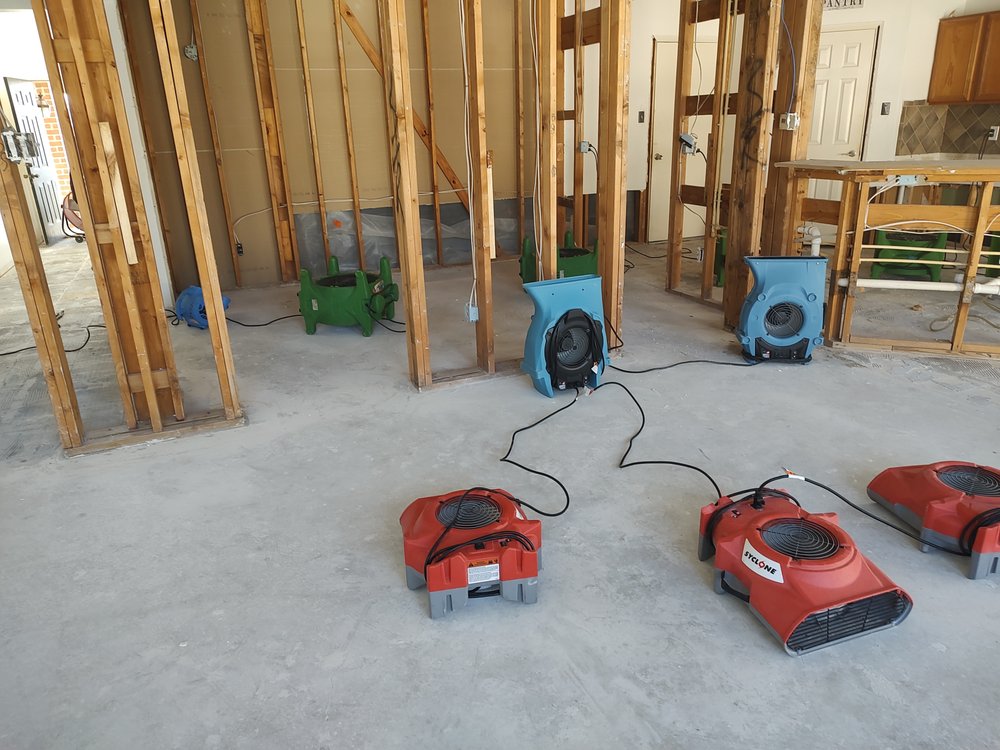
Once the area is safe, materials that sewage reached need removal under containment, not just drying. Our basement flood cleanup service handles extraction, removal and drying with moisture readings on file for your insurer. If you are still deciding what to do, the WDR Mississauga homepage lists every service we offer across the city.
Common questions
Is my Mississauga home in a floodplain?
Most Mississauga homes are not in a regulated floodplain, but the ones near the Credit River and the creeks may be. Credit Valley Conservation and the Toronto and Region Conservation Authority both publish online maps you can search by address. The maps are for information, so contact the conservation authority if you need a formal answer for a permit or a sale.
Why did my basement flood in 2024 when it stayed dry in 2013?
The July 16, 2024 storm dropped more than 106 mm in about four hours, and the August storm put up to 170 mm on the hardest-hit areas. Those bursts were more intense than what many local pipes were sized for, so homes that had never taken water saw sewers fill and back up. The order of the storms mattered too, since the August rain fell on ground that was still wet.
Does a sump pump stop sewer backup?
No. A sump pump moves groundwater from around the foundation. Sewer backup comes up through the floor drain from the sanitary pipe, and the device that blocks that path is a backwater valve on the sanitary line.
Who do I call when the street is flooding?
The City of Mississauga asks residents to report flooded roads, blocked catch basins and flood damage by calling 311. If sewage is coming into your home, the Region of Peel takes reports at 905-791-7800. Call 911 for anyone in immediate danger.
Published October 12, 2026 by WDR Mississauga. Rebates, bylaws and insurance terms change, so confirm details with the program, your corporation or your insurer before you act.