
IICRC Certified WSIB & $5M Insured 45-Min Average Response

Call Now for 24/7 Emergency Service (877) 738-2893

Call (877) 738-2893

166 Dundas St W, Mississauga, ON L5B 2N6, Canada

Dixie, Mississauga · L4W · L4X · L4Y

Water Damage Restoration in Dixie

Industrial units, rail corridor and post-war streets around Dixie Rd, where a water loss can shut down a business as easily as a home.

Answered live 24/7 · Free inspection · No obligation

Know the neighbourhood

Dixie, street by street

A mixed residential, commercial and light-industrial area along the eastern edge of the city. We work both sides of it. Homes on the residential streets, and commercial units where a failure shuts down a business instead of a household.

Dixie follows the Dixie Rd corridor in east Mississauga, from the QEW north past Dundas St E toward Eglinton Ave E and the airport. The Etobicoke Creek marks its eastern side, and the Milton GO line cuts across it.

Local landmarks we work around

  • Dixie GO station on the Milton line
  • Dixie Rd and Dundas St E
  • Tomken Rd and Eglinton Ave E industrial area
  • Etobicoke Creek on the eastern edge
Housing profile

1950s–1970s, with newer infill

Bungalows, semis and industrial condo units

Residential streets here are mostly post-war bungalows and semis, with some newer houses on split lots. North of Dundas, the area turns to warehouses, small industrial condos and flex units with offices and showrooms at the front. Many small businesses keep stock on the floor or in racking, so even shallow water does real damage.
Drainage and soil

Dixie is flat, and large flat roofs and parking lots cover much of the land north of Dundas. That surface sends a lot of water into storm sewers very quickly. Flat roofs drain through internal roof drains that clog with debris and back up into the unit below. On the residential side, homes near the creek and the rail line sit low and take water in heavy storms.

Local conditions

What floods homes in Dixie

These three conditions decide where we look first on a Dixie call, what can be saved and where the drying equipment goes.

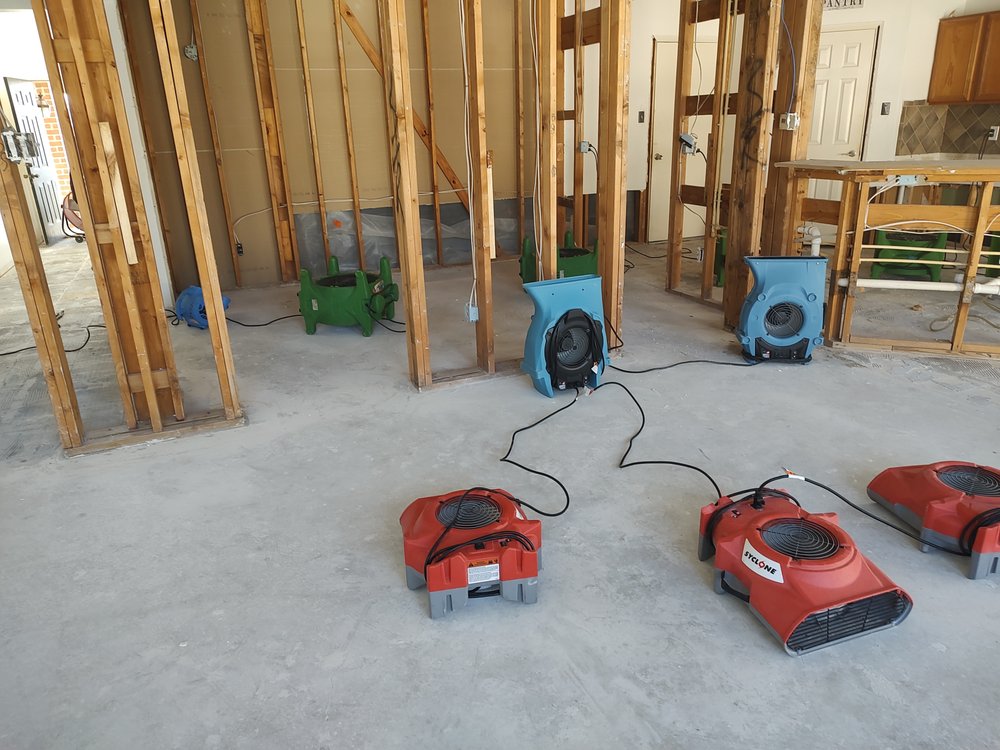
Water damage restoration equipment on a job in Dixie, Mississauga
  1. 01

    Commercial and warehouse units

    Sprinkler discharge, roof drains and failed roof membranes cause large-volume losses needing immediate extraction to keep a business trading.

  2. 02

    Etobicoke Creek proximity

    The eastern boundary of the city follows the creek, and properties near it take overland water during any significant storm.

  3. 03

    Mixed-age housing stock

    Post-war homes sit next to newer infill, so no single failure pattern applies. Every job here starts by establishing what the building actually is.

Storms on record

Flood history and risk in Dixie

In Dixie the risk splits two ways. Homes near the creek and the rail line face basement flooding in a heavy storm. Commercial and industrial units face roof drain backups and water coming in at the loading door. Clearing roof drains in the fall and checking door seals cuts most of the commercial calls we get here.

  1. August 17, 2024

    Dixie Road at Dundas Street was one of the intersections the City closed in the August storm, when up to 170 mm fell on the hardest-hit parts of the city. Little Etobicoke Creek rose fast enough that the City asked people to stay off its trails. Flat commercial roofs north of Dundas sent water into internal drains faster than they could carry it, and some backed up into the units below.

  2. July 16, 2024

    More than 106 mm of rain fell in a few hours. Low residential streets near the creek and the rail line took water, and businesses with flat roofs saw ceiling leaks where roof drains had clogged.

City projects

The City is planning the Dixie Dundas Drainage Improvements beside Little Etobicoke Creek, with work staged from 2025 through 2033. It has also scheduled dredging and rehabilitation of the stormwater ponds along the Dixie Road and Tomken Road transitway stations, which hold back runoff from the paved land around them.

A call we get often in Dixie

Roof drain overflow in an industrial unit

A call we get often here: a heavy rain on a flat-roofed industrial building, and water pouring in through the ceiling of one unit. A blocked roof drain or a failed membrane seam usually sits right above it. Stock on the floor, office drywall and electrical are all at risk. We extract, move or protect stock, and set up drying so the business can keep running in part of the space.

Same problem? Call now

Through the year

When water hits Dixie

  1. Winter

    Sprinkler lines in unheated loading areas and warehouse corners freeze and burst. Dry systems with low points that were not drained are a common cause.

  2. Spring

    Snow and ice on flat roofs melt fast and roof drains blocked by winter debris overflow into the units below.

  3. Summer

    Intense storms flood loading docks and ramps that slope down toward the building. Water then runs under the overhead doors.

  4. Fall

    Leaves and debris block roof drains and scuppers. Without a fall cleaning, the first heavy rain finds a way inside.

Before it happens

Protecting a Dixie home from water damage

  1. 1

    Have roof drains and scuppers cleared each fall and after any large storm.

  2. 2

    Keep stock and files on pallets or shelves, not directly on the floor, in ground-floor units.

  3. 3

    Drain low points on dry sprinkler systems before winter and keep heat on in loading areas.

  4. 4

    For homes near the creek or rail line, make sure downspouts discharge well away from the foundation.

Local questions

What Dixie owners ask us

Not covered here? Call and ask a restoration manager directly.

(877) 738-2893
Water came in through the roof of our industrial condo unit. Is that our problem or the condo corporation's?

It depends on your declaration, but roofs are usually common elements. We document the source, the damage and the moisture readings so both you and the property manager have a clear record. We can start drying right away while that is sorted out.

Can you dry our unit while we keep working?

In most cases, yes. We set up containment around the wet area and run drying equipment there while the rest of the unit stays open. We plan the setup around your loading doors and work areas.

We have a house near the Dixie GO tracks. Why does our basement take water when neighbours stay dry?

Small differences in grade matter a lot on flat ground. A lot that sits a little lower than the road or the rail berm collects water from around it. We look at grading, downspouts and window wells along with the inside of the basement.

How quickly can a crew reach Dixie?

Our average arrival in Dixie is 35 min from the Dundas Street West base in Cooksville. A restoration manager answers live, 24 hours a day, and sends the nearest equipped truck while you are still on the line.

Every hour counts

Water never waits. Neither do we.

Drywall wicks moisture upward at roughly 1 inch (2.5 cm) an hour, and mould takes hold inside 24 to 48 hours. Call now and a certified crew reaches your street tonight.

  • Answered live, 24/7/365
  • 45-minute average arrival
  • Billed to your insurer
Call Now · (877) 738-2893