Answered live 24/7 · Free inspection · No obligation
Know the neighbourhood
Creditview, street by street
Streets running along the Credit River valley, holding a mix of 1970s through 1990s housing. The valley dominates everything here. Elevation change across a single street is often enough to decide which houses flood and which stay dry.
East of the Credit River around Creditview Road, generally south of Eglinton Avenue with Burnhamthorpe Road West and Mavis Road crossing the area.
Local landmarks we work around
Credit River
Riverwood conservation lands
Creditview Road
Burnhamthorpe Road West
Mavis Road
Housing profile
1970s–1990s
Detached two-storeys and backsplits, many with walkout or lookout basements
Homes built on the slope toward the valley often have walkouts at the back and a full basement at the front. That makes for bright, usable basement space, and a direct path for water that runs down the lot. Many houses have had their basements finished more than once, so we often find two layers of flooring or walls built over older ones.
Drainage and soil
Everything here drains toward the Credit River valley, and the ground can drop noticeably from the front of a lot to the back. Runoff from the street and from neighbours uphill crosses back yards on its way down. Lots on the lower side of a street collect it at their walkout doors and window wells. Sump pumps on these streets work harder than most, and where they discharge matters as much as whether they run.
Local conditions
What floods homes in Creditview
These three conditions decide where we look first on a Creditview call, what can be saved and where the drying equipment goes.
01
Credit River valley runoff
Water moves downhill toward the valley and finds the lowest opening on its way there. Window wells and walkout doors are the usual entry points.
02
Walkout and lookout basements
Grade-level doors and larger below-grade windows give surface water a direct route inside that a standard basement never offers.
03
Sump discharge routing
Pumps discharging too close to the foundation simply recirculate the same water. This is one of the most common faults we find on these streets.
A call we get often in Creditview
Walkout door during a downpour
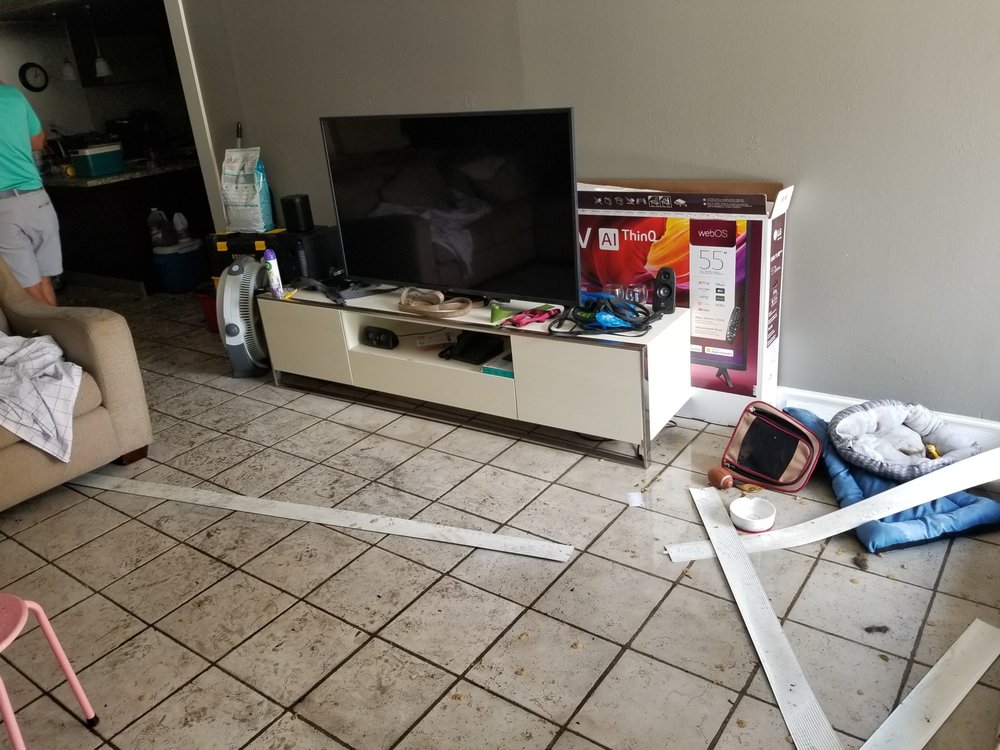
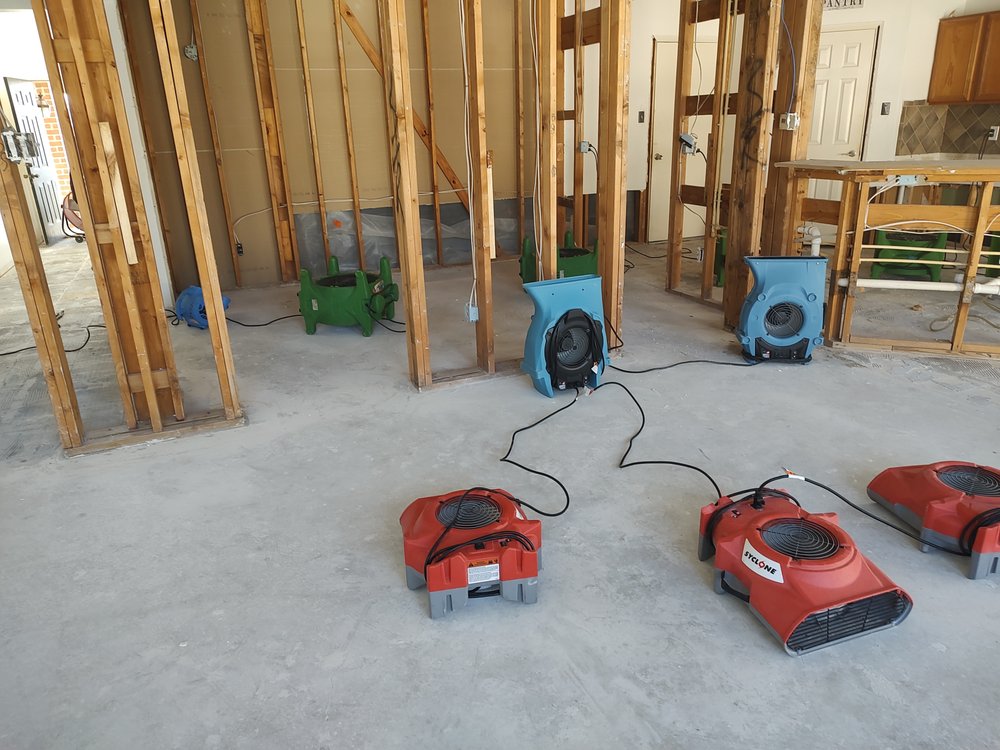
A call we get often here: during a heavy summer storm, water runs down the back yard, pools at the walkout patio and comes in under the basement door. The carpet or laminate nearest the door gets soaked first, and the water spreads under the baseboards toward the front of the house. We extract it, dry the floor and walls and look at how the patio slopes and where the downspouts and sump discharge. Fixing the route the water took is what stops it from coming back.
We have a walkout basement. Why does water come in under the door?
A walkout sits at the bottom of the lot, so runoff from above ends up at that door. If the patio slopes toward the house or its drain is blocked, water pools against the threshold and finds a way under it. Regrading the patio and keeping the drain clear usually solves it.
Does living close to the Credit River mean my house is in a flood zone?
Not necessarily. Most homes on these streets sit well above the river itself, and their water problems come from runoff and the slope, not from the river rising. Credit Valley Conservation maps the regulated areas if you want to check your property.
We found two layers of flooring when the carpet came up. Is that a problem?
It can be. Water gets trapped between the layers and the subfloor stays wet long after the top looks dry. We usually remove the top layers to dry the concrete properly before anything new goes down.
How quickly can a crew reach Creditview?
Our average arrival in Creditview is 45 min from the Dundas Street West base in Cooksville. A restoration manager answers live, 24 hours a day, and sends the nearest equipped truck while you are still on the line.
Drywall wicks moisture upward at roughly 1 inch (2.5 cm) an hour, and mould takes hold
inside 24 to 48 hours. Call now and a certified crew reaches your street tonight.