Answered live 24/7 · Free inspection · No obligation
Know the neighbourhood
Port Credit, street by street
The village core sits where the Credit River meets Lake Ontario, and the water table sits right there with it. Housing runs from 1920s cottages and post-war bungalows on the side streets through to new lakeside condo towers. We handle sixty-year-old clay laterals on one call and a twentieth-floor riser on the next.
Centred on Lakeshore Road where it crosses the mouth of the Credit River, running from the Lake Ontario shoreline north toward the QEW, with Mineola above it and Lakeview to the east.
Local landmarks we work around
Lakeshore Road East and West through the village core
J.C. Saddington Park and the Credit River marina
Port Credit lighthouse at the river mouth
Port Credit GO station on the Lakeshore West line
Memorial Park and the waterfront trail
Housing profile
1920s–1950s core, 2000s–2020s towers
Cottages, storey-and-a-half homes, semis and lakeside condos
The older houses south of the rail line were often built with shallow basements that were dug out and finished decades later. Those renovations rarely added drainage to match. Newer mid-rise and tower buildings near the river bring a separate set of problems tied to shared plumbing.
Drainage and soil
Port Credit is at the bottom of the Credit River watershed, so everything upstream eventually passes through here. Soils near the lake are sandy and silty and drain quickly, but the groundwater sits close to the surface. Many lots are nearly flat, which leaves little natural fall away from the foundation. When the river runs high and the lake is up at the same time, storm outlets near the shore drain more slowly.
Local conditions
What floods homes in Port Credit
These three conditions decide where we look first on a Port Credit call, what can be saved and where the drying equipment goes.
01
High water table near the lake
Basements south of Lakeshore sit close enough to the lake that hydrostatic pressure stays a year-round condition rather than a spring one. Seepage at the cove joint is the call we take most often here.
02
Original clay and cast-iron laterals
Much of the pre-war stock still runs its first lateral out to the main. Root intrusion and collapsed sections cause backups that look like a Region problem and usually sit on the homeowner's line.
03
Condo stacks along the waterfront
The newer towers bring in-suite valve failures and shared-riser losses that reach four or five suites before anybody locates the shut-off.
A call we get often in Port Credit
Dug-out basement, wet carpet after a thaw
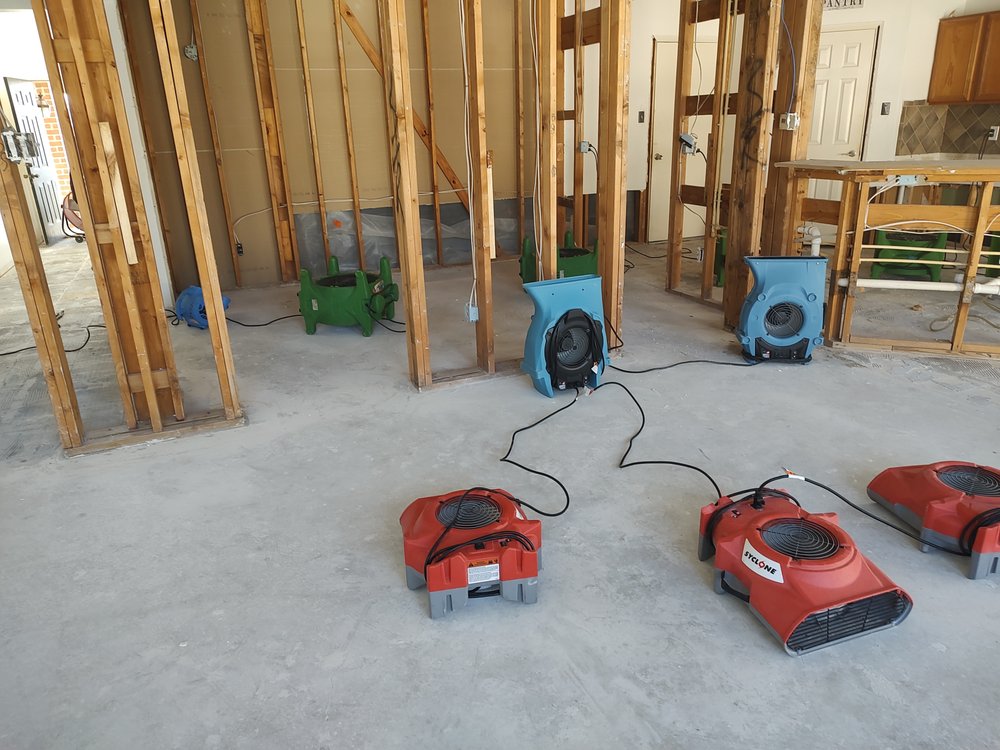
A call we get often here: an older home with a basement that was lowered and finished years ago, and carpet that is damp along one wall after a quick thaw. There is no single leak to point to. Water is coming through the cove joint or an old patch where the floor was poured over. We lift the flooring, open the bottom of the wall to check the framing and run drying until readings match a dry reference spot.
Snowmelt and spring rain raise the water table under the village quickly. Low basements near the lake show seepage before anywhere else in the city.
Summer
Short, intense storms overload street drains on flat blocks near Lakeshore Road. Window wells and basement walkouts take water first.
Fall
Lakefront wind drives rain sideways into older wood windows and brick. Leaks show up on the side of the house facing the water.
Winter
Pipes in uninsulated crawl spaces and old exterior walls freeze when wind comes straight off the lake. Condo balcony door seals also start to leak in freeze-thaw cycles.
My house is a few blocks from the lake. Is that why the basement is always damp?
It is often part of it. Groundwater sits closer to the surface in Port Credit than in most of the city. A moisture reading at several points tells us whether you have seepage, condensation or a plumbing leak, and each one needs a different fix.
Do you work in the new condo buildings near the river?
Yes. We coordinate with property management, document every affected suite and dry the common areas as well. We keep the building's records and each owner's claim separate so nothing gets mixed up.
My older home has a stone or block foundation. Can it be dried properly?
Yes, but it takes longer than poured concrete. Older masonry holds water in the mortar joints, so we use targeted air movement and dehumidification and confirm with readings before anything is closed up.
How quickly can a crew reach Port Credit?
Our average arrival in Port Credit is 35 min from the Dundas Street West base in Cooksville. A restoration manager answers live, 24 hours a day, and sends the nearest equipped truck while you are still on the line.
Drywall wicks moisture upward at roughly 1 inch (2.5 cm) an hour, and mould takes hold
inside 24 to 48 hours. Call now and a certified crew reaches your street tonight.